
Lock Diagnostics & Hardware Maintenance Guide
Why a Lock Sticks and When It Needs Repair
A sticky door lock is usually a mechanical warning, not an isolated failure. Discover the root causes of sticky locks, why standard WD-40 causes gumming, how to lubricate cylinders with dry graphite, and when door misalignment demands professional locksmith repair.
- Rapid Pittsburgh Dispatch
- All Pittsburgh Neighborhoods
- Damage-Free Repairs
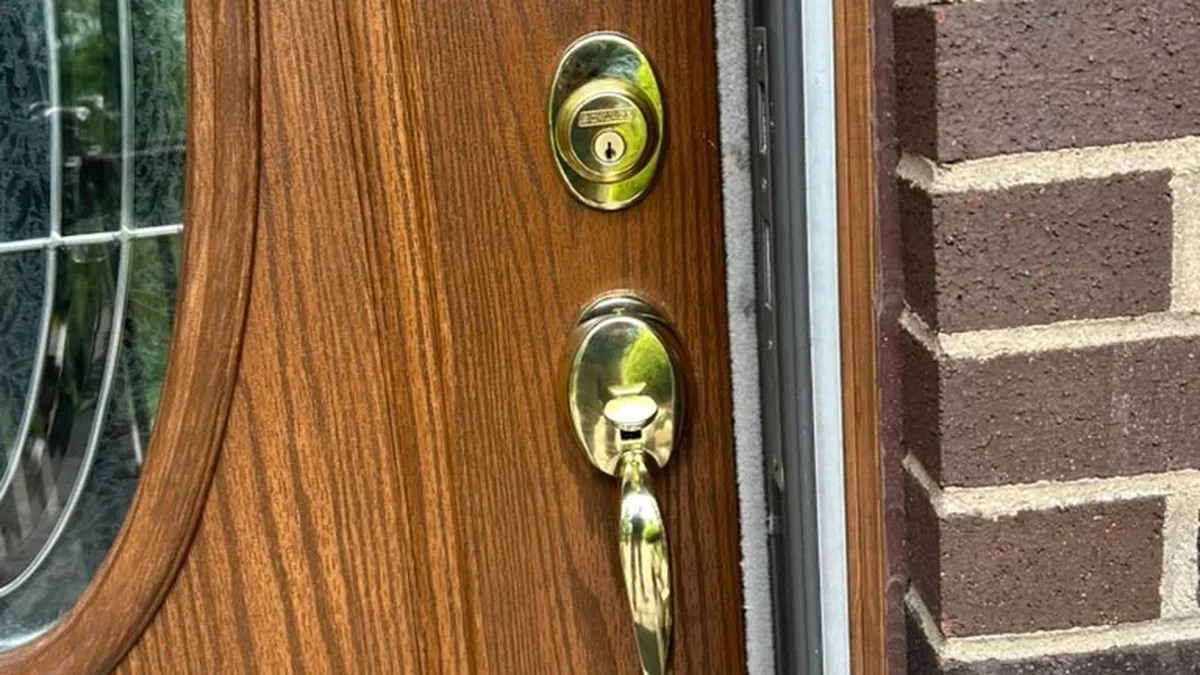
Quick Summary: Why Does a Door Lock Stick and How Do You Fix It?
A door lock sticks primarily due to dirt accumulation inside the lock cylinder, a dry pin tumbler mechanism, a worn key, or door frame misalignment caused by humidity and foundation settling. To identify the exact cause, execute the Open-Door Turn Test: turn the key with the door swinging open. If the key turns smoothly while open but binds when closed, the strike plate is misaligned. If the key binds while open, the cylinder contains debris or worn brass pins. Never spray standard WD-40 into the keyway, because oil-based lubricants attract airborne grit and create gummy paste inside the cylinder. Instead, use dry powdered graphite or PTFE spray, rub a soft pencil lead along key grooves, or call a professional locksmith to re-align strike plates and re-pin worn tumblers. For expert lock repair and deadbolt servicing in Pittsburgh, contact Union Locksmith Services at (412) 512-2433.
Table of Contents
Common Causes of a Sticky Door Lock
A sticky door lock creates friction when you insert, turn, or withdraw your key. Over time, friction accelerates cylinder wear until the key snaps in the keyhole or the bolt locks you out entirely. Pinpoint the root issue before applying brute force to the key:
- Internal Debris & Dust: Tiny metal particles, pocket lint, and road dust settle into the pin chambers, preventing spring-loaded driver pins from dropping cleanly across the shear line.
- Improper Past Lubrication: Applying household vegetable oil or standard liquid WD-40 temporarily loosens the cylinder, but leaves an oily film that gathers grime and coagulates into sludge.
- Door Frame Sag & Seasonal Humidity: in Greater Pittsburgh and surrounding areas area, winter cold and humid summer air cause wooden frames to expand and warp. When the door shifts, the deadbolt rubs hard against the metal strike plate opening.
- Key Degradation or Bent Cuts: Brass keys soften with age. Once the factory bitting wears down by mere fractions of a millimeter, pins fail to reach the cylinder shear line.
Sticky Lock Diagnostic & Resolution Tracker
| Entity / Symptom | Category / Root Cause | Current Status | Key Metric / Estimated Cost | Primary Source Link | Last Verified |
|---|---|---|---|---|---|
| Dry Pin Tumblers | Lack of Lubrication | DIY Fixable | $5 – $10 (Dry graphite powder) | Locksmith Ledger Standards | October 2026 |
| Misaligned Strike Plate | Frame Sag / Settling | Requires Realignment | $0 DIY / $75 – $115 Pro Adjustment | BHMA Installation Manual | October 2026 |
| Gummy WD-40 Residue | Contaminated Keyway | Needs Chemical Flush | $12 (Brake cleaner / solvent flush) | ALOA Technical Bulletin | October 2026 |
| Worn Bottom Brass Pins | Mechanical Wear | Cylinder Lock replacement Needed | $20 – $35 Lock replacement Service | Union Locksmith Pricing | October 2026 |
| Collapsed Bolt Spring | Internal Latch Failure | Hardware Replacement | $45 – $95 Grade 2 Deadbolt | ANSI/BHMA A156.36 | October 2026 |
The Union Locksmith 4-Step Pin-and-Latch Diagnostic Protocol
When confronted with a sticky door lock, execute our structured technician protocol before buying replacement hardware or forcing the key barrel:
- The Open-Door Swing Test: Open the entrance door completely and turn the key back and forth. If the cylinder turns without resistance while the door is open, the lock mechanism is healthy; the issue is frame misalignment.
- Key Bitting Inspection: Inspect the working key against a brand-new factory cut. If the ridges and valleys appear rounded or smoothed down, the key is slipping past the driver pins.
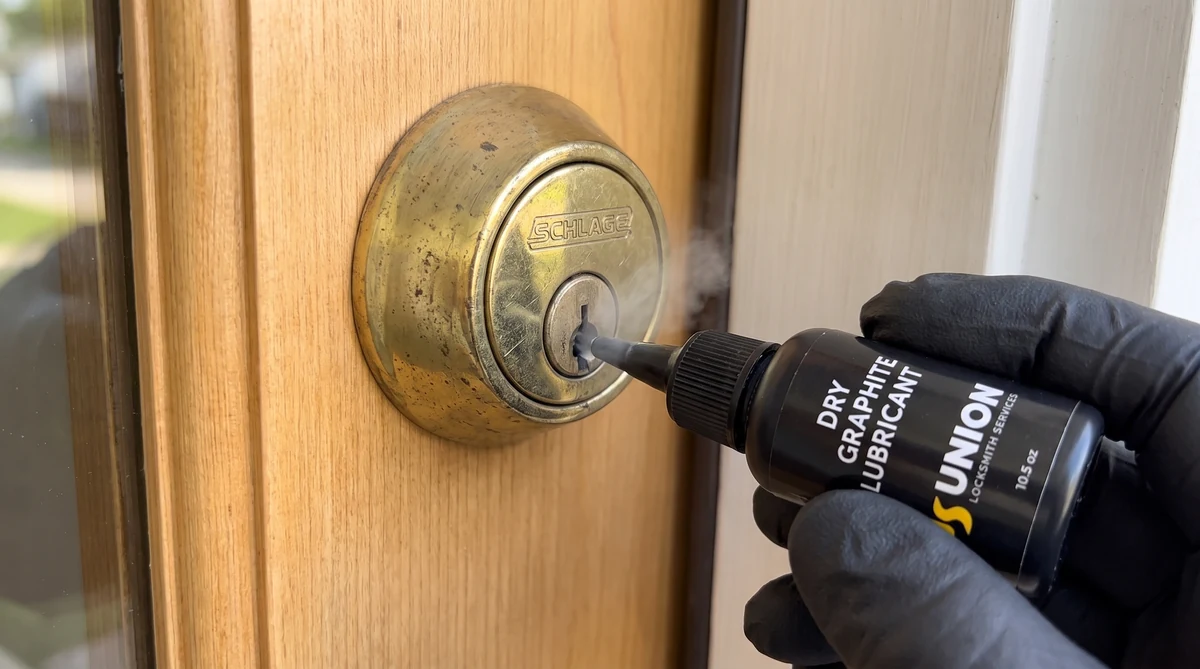
- Debris Flush & Dry Lubrication: Use a blast of compressed air to clear the keyway. Inject a small puff of dry powdered graphite directly into the keyhole. Insert the key and cycle the lock 10 times to distribute the graphite across all pins. You can also coat the key blade with a soft graphite pencil.
- Strike Plate Mortise Realignment: If the bolt rubs the strike plate, loosen the strike screws, file down overlapping metal edges, or sink 3-inch screws into the jamb to pull sagging hinges back into plumb alignment.
Why You Must Never Use WD-40 on Door Locks
A widespread homeowner misconception is reaching for a can of standard WD-40 when a lock sticks. Standard WD-40 is a solvent and water displacer, not a long-term mechanical lubricant. Inside a tight pin tumbler lock cylinder, it breaks down existing factory grease and leaves behind an oily film. Within weeks, household dust, pet hair, and airborne pollen stick to the oil, forming a thick paste that gums up the miniature springs. Once the springs jam, pins become stuck in the upper chambers, leaving the lock vulnerable or completely inoperable.
Always choose powdered graphite or a specialized dry PTFE lock lubricant. Dry graphite provides smooth friction reduction without leaving any wet residues for dirt to cling to.
When to Repair vs. Replace a Sticking Lock
Deciding between lock repair and total hardware replacement comes down to mechanical integrity:
- Repair When: The lock body is structurally sound, made of solid forged brass, and the sticking stems from dry pins, a misaligned strike plate, or minor key wear. A simple cleaning, re-pinning, or frame adjustment restores smooth operation for years.
- Replace When: The deadbolt bolt exhibits excessive play, the interior tailpiece is warped, or the cylinder has suffered damage from forced entry attempts. Upgrading to an ANSI Grade 1 high-security deadbolt provides hardened steel anti-drill pins and reinforced strike boxes that deter physical burglary attacks.
Frequently Asked Questions
Sticky Lock Troubleshooting FAQs
Can a pencil fix a sticky lock?
Yes. Pencil lead is made from a combination of natural graphite and clay. Rubbing a soft sharpened pencil (such as a No. 2 or HB pencil) vigorously along the grooves and teeth of your key, then sliding the key into the keyway several times, deposits fine graphite particles onto the internal pins and frees minor sticking.
How do I fix a sticky lock when the door is closed?
If a lock only sticks when closed, push firmly against the exterior door or lift the door handle slightly while turning the key. This relieves pressure on the deadbolt latch. Once open, inspect the strike plate on the door frame for rub marks and reposition the plate to eliminate friction.
What is the best lubricant for a sticking door lock?
The best lubricant is dry powdered graphite or a dedicated dry PTFE lock spray. These dry formulas coat the brass tumbler pins without attracting airborne dirt or freezing during severe Pittsburgh winter cold snaps.
Can a locksmith fix a sticky lock without replacing it?
In most situations, yes. A professional locksmith can disassemble the cylinder, clean out coagulated dirt and old oils with ultrasonic solvents, replace worn bottom pins, and realign the door strike plate, saving you the expense of purchasing a completely new lockset.
What should I do if my key gets stuck inside the lock?
Do not force or wiggle the key violently, as brass keys easily twist and snap off inside the plug. Apply a gentle puff of dry lubricant around the key entrance, press your thumb flat against the cylinder face to prevent plug pulling, and ease the key outward with steady, straight pressure. If it remains trapped, call an emergency locksmith to extract it safely.
Need a Locksmith Now?
Stuck or Jammed Door Lock in Pittsburgh?
Get prompt on-site lock repairs, cylinder servicing, and strike realignment anywhere in Allegheny County.
Official directory listings & verified reviews across Greater Pittsburgh and surrounding areas