
Smart Home Access & Electronic Security Guide
What to Consider Before Installing a Smart Lock
Keyless entry provides exceptional convenience, but an electronic lock is only as reliable as the door alignment behind it. Discover essential compatibility factors, backset measurements, sub-zero battery performance, and ANSI security grades before you install.
- Certified Smart Hardware Installation
- All Pittsburgh Neighborhoods
- Door Prep & Frame Mortising
Quick Summary: What Must You Check Before Installing a Smart Lock?
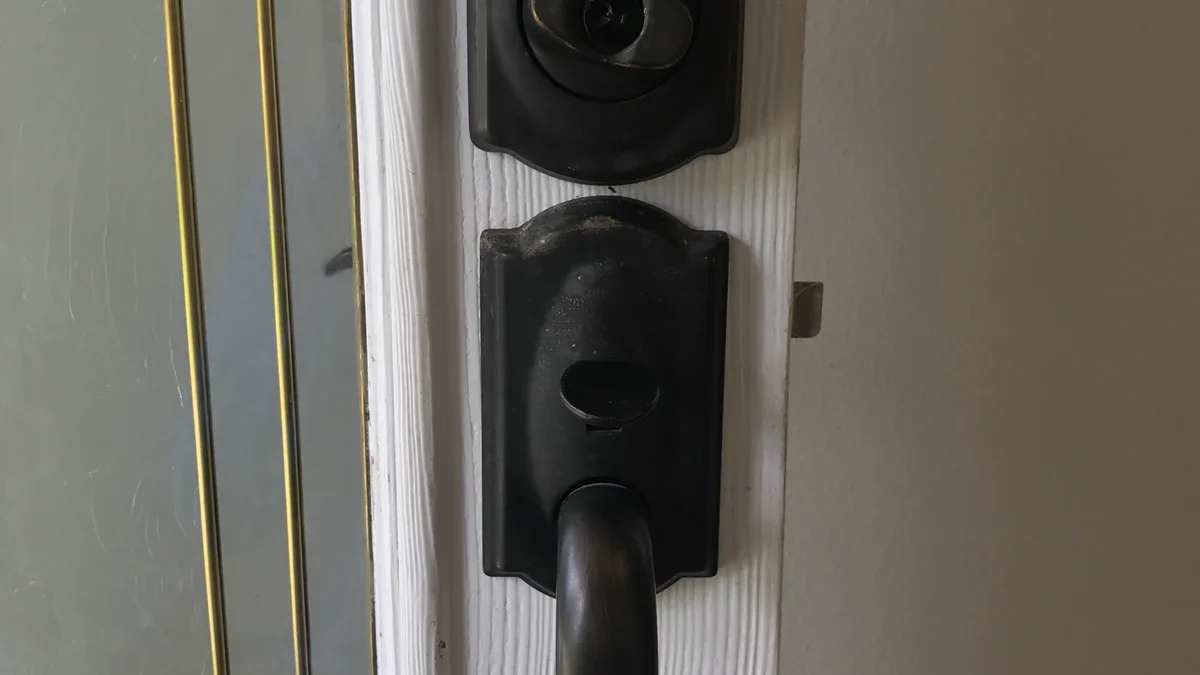
Before purchasing or installing a smart lock, you must verify door alignment, measure backset spacing (2-3/8 or 2-3/4 inches), confirm door thickness (standard 1-3/4 inches), and verify that the deadbolt extends into the strike plate without needing you to push or pull the door. Smart lock servo motors draw excessive battery power and jam when experiencing mechanical resistance from a misaligned strike. In colder climates like Pittsburgh, select models equipped with physical key cylinder backups and load them with lithium AA batteries, which operate reliably down to -40 degrees Fahrenheit unlike alkaline cells that freeze. Additionally, prioritize ANSI/BHMA Grade 1 or Grade 2 certified smart deadbolts to maintain physical kick-in resistance. For professional door preparation, smart lock installations, and deadbolt realignment across Greater Pittsburgh and surrounding areas, contact Union Locksmith Services at (412) 512-2433.
Table of Contents
Essential Pre-Installation Compatibility Factors
A smart lock does not correct an imperfect door. In fact, electronic motorized deadbolts are far less forgiving than manual locks. Before selecting hardware, inspect these critical mechanical prerequisites:
- Door Alignment & Free Latch Travel: If you must pull, push, or lift your front door to turn your current deadbolt, a smart lock motor will bind, fail to auto-lock, and drain its batteries within days. The bolt must throw freely into the door jamb mortise.
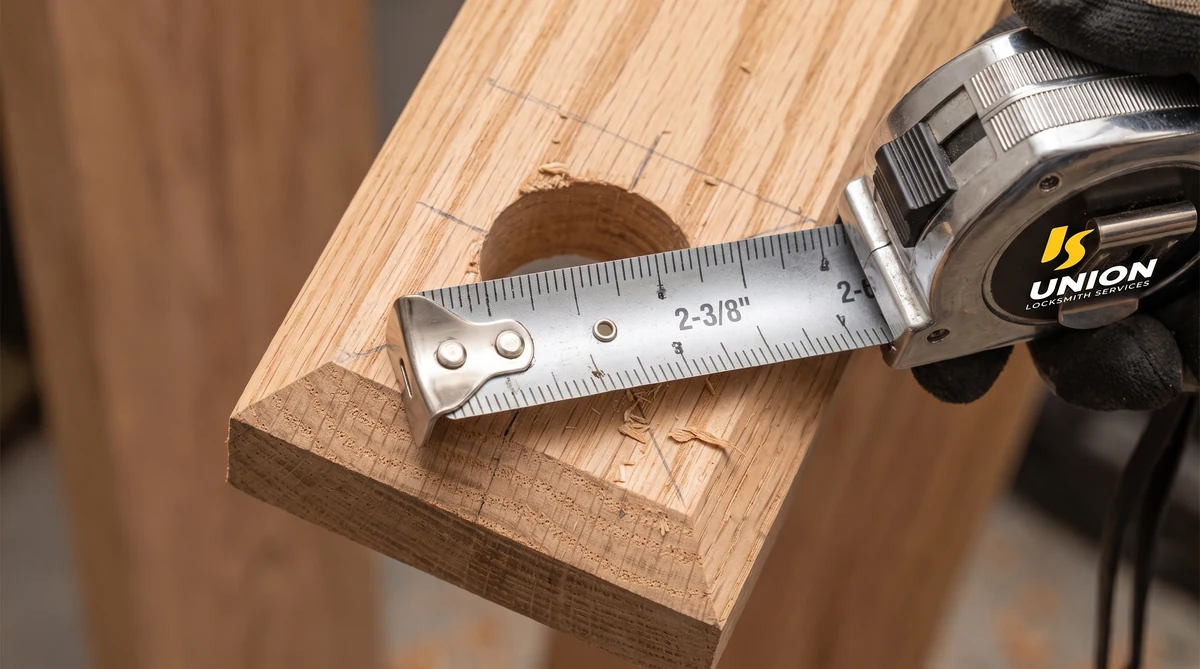
- Standard Backset Dimensions: Most American exterior residential doors use either a 2-3/8 inch or 2-3/4 inch backset (the distance from the door edge to the center of the cylinder bore hole). Verify your lockset includes an adjustable latch.
- Bore Hole Diameter & Door Thickness: Standard residential deadbolt prep requires a 2-1/8 inch cross-bore hole and a 1-inch edge bore on doors 1-3/8 to 1-3/4 inches thick. Thicker custom doors require extended screw kits.
- Weather Exposure & Outdoor Rating: Exterior smart keypads must feature at least an IPX5 water resistance rating to withstand Pittsburgh rain, freezing sleet, and humidity.
Smart Lock Architecture & Specification Tracker
| Model Architecture | Connectivity Type | ANSI Security Grade | Battery Life / Retail Price | Primary Source Link | Last Verified |
|---|---|---|---|---|---|
| Schlage Encode / Encode Plus | Built-in Wi-Fi / Thread | ANSI Grade 1 (Highest) | 6 months / $270 – $320 | Schlage Commercial Cert | October 2026 |
| Yale Assure Lock 2 | Bluetooth / Wi-Fi Module | ANSI Grade 2 | 6 – 9 months / $180 – $260 | Yale Home Specifications | October 2026 |
| August Wi-Fi Smart Lock | Retrofit Interior Wi-Fi | Retains Existing Grade | 3 – 6 months / $160 – $200 | August Hardware Guide | October 2026 |
| Kwikset Halo / Aura | Direct Wi-Fi / Keypad | ANSI Grade 2 | 4 – 6 months / $150 – $220 | Kwikset Smart Lock Specs | October 2026 |
| Commercial Keypad Deadbolt | Standalone Heavy-Duty | ANSI Grade 1 | 2 – 3 years / $190 – $350 | BHMA Certified Hardware | October 2026 |
The Union Locksmith 5-Point Smart Lock Compatibility Protocol (2026)
To ensure error-free electronic operation, our technicians audit residential entries against five physical benchmarks before installation:
- Zero-Friction Throw Test: We test whether the deadbolt extends smoothly without catching the strike plate lip while the door is resting against its weatherstripping.
- Mortise Depth Clearance: Modern smart deadbolts require a full 1-inch deep mortise cavity in the door jamb. Shallow 3/4-inch pockets trigger motor stall sensor errors.
- Sub-Zero Battery Chemistry Selection: We require high-capacity 1.5V Energizer Ultimate Lithium AA cells for exterior smart locks, preventing mid-winter voltage collapse common with alkaline batteries.
- Physical Key Override Redundancy: We evaluate models featuring an exterior keyed cylinder, ensuring homeowners never get locked out during dead-battery situations or electronic circuit malfunctions.
- Hardened Strike Frame Anchorage: We anchor the reinforced strike plate with 3-inch case-hardened steel screws directly into the home structural stud, preserving physical security against kick-in attacks.
Wi-Fi vs. Bluetooth vs. Z-Wave: Selecting Connectivity
Smart locks communicate through three primary wireless protocols. Understanding the trade-offs prevents connection drops and battery frustration:
- Direct Wi-Fi: Connects straight to your home router without additional hubs. Provides instant remote access from anywhere, but consumes battery power faster than other protocols.
- Bluetooth / Apple HomeKey: Operates locally when your phone is within 30 feet. Exceptional battery longevity (often 9 to 12 months) and tap-to-unlock convenience, but requires a smart hub nearby for remote guest access.
- Z-Wave & Zigbee: Integrates into professional security systems (such as Ring Alarm, Alarm.com, or SmartThings). Ultra-low battery consumption and exceptional range via mesh networking.
Frequently Asked Questions
Smart Lock Installation FAQs
Are smart locks as secure as traditional deadbolts?
Yes, provided you choose an ANSI/BHMA Grade 1 or Grade 2 certified smart deadbolt. High-quality smart locks feature hardened steel anti-saw bolts and reinforced strike plates that deliver identical physical kick-in resistance to premium traditional deadbolts, with the added benefit of bank-grade 128-bit or 256-bit AES encryption.
What happens if the smart lock battery dies while I am outside?
If your smart lock has a physical keyway, you can simply use your backup brass key. Keyless models (without keyholes) include exterior emergency contact terminals where you can touch a 9-volt battery against the bottom terminals to provide temporary electrical power to punch in your code.
Can smart locks withstand cold Pittsburgh winters?
Yes, provided you use lithium batteries. Standard alkaline batteries contain water-based electrolytes that freeze and lose voltage rapidly below 32 degrees Fahrenheit. Lithium batteries function flawlessly down to -40 degrees Fahrenheit, keeping keypad circuits fully active.
Can a smart lock be replaced to match my existing house key?
If the smart lock features a compatible keyway (such as a standard 5-pin Schlage SC1 or Kwikset KW1 cylinder), a professional locksmith can easily change the locks on the cylinder to match your other traditional house keys, preserving single-key convenience.
Why does my smart lock keep jamming when it tries to lock automatically?
Jams occur when the deadbolt does not line up perfectly with the strike plate hole on the frame. If the bolt scrapes against the metal strike plate edge, the sensitive electronic motor detects the resistance and stops to prevent gear damage. Re-mortising the strike plate or realigning the door frame resolves the problem.
Smart Access Upgrades
Upgrade to Keyless Security in Pittsburgh
Get clean professional smart lock installation, precision door alignment, and heavy-duty deadbolt reinforcement across Greater Pittsburgh and surrounding areas.
Official directory listings & verified reviews across Greater Pittsburgh and surrounding areas